
AI has made outreach cheap, and PR expensive
Anyone can send 10,000 emails in an afternoon. Journalists do not answer. The retainer still bills you for the hours. Then a buyer asks a chatbot who you are, and a lot of the old papers lock the bot out. So who finds you?

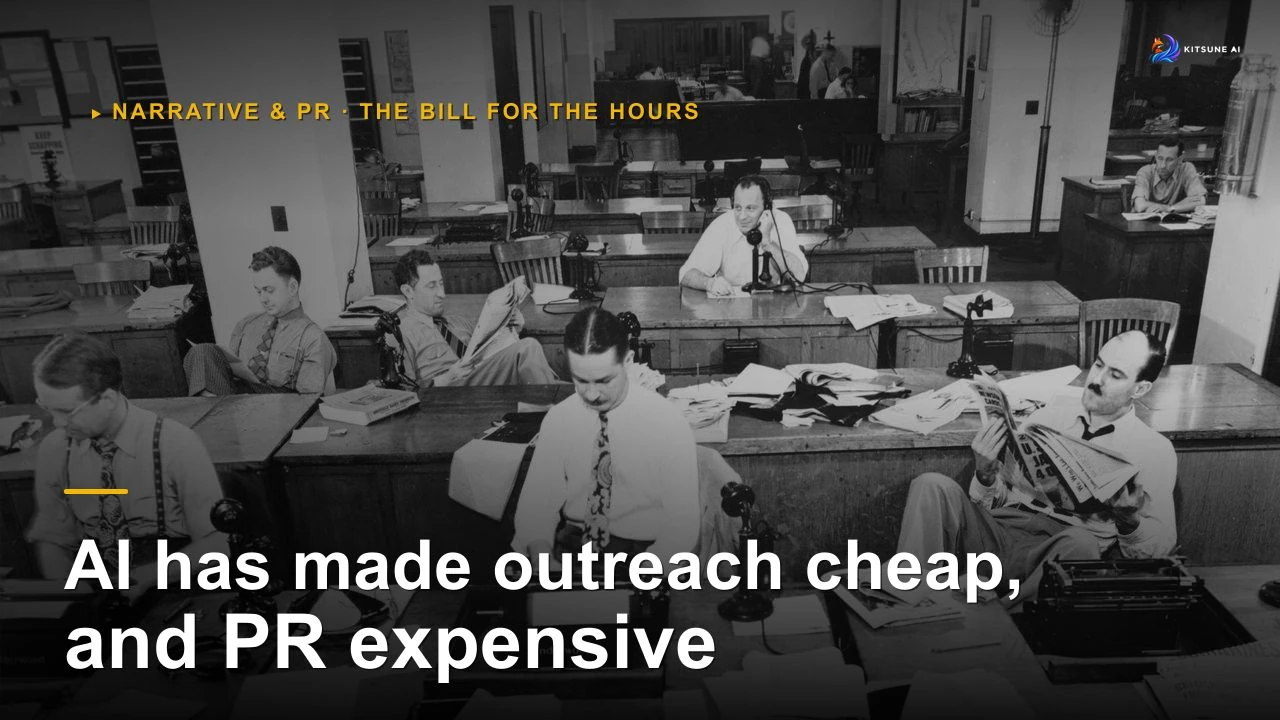
- Old PR was a long wait you paid for by the hour. Agencies chased journalists on a monthly retainer, logged the "touches," and assumed a story would fall out later. The tools now let anyone do the hours, and AI will send 10,000 notes before lunch. On 1 September, HARO said 21% of the pitches it sees are written entirely by a machine. A third of those journalists now block them unread. A human note is about three times more likely to get used.
- The journalist is being hit from the other side. On 8 September, Cleveland.com put a reporter's byline on an AI desk story while she was on her honeymoon. She had not written a word of it. Real reporters are busier, and less willing to open a stranger's mail. That is why a human yes costs more, and why you now pay for the article.
- The reader moved. A buyer, an investor, a hire now asks ChatGPT or Perplexity who you are. In January, 79% of the biggest UK and US news sites were already blocking at least one AI training crawler, and 71% were blocking the bots that fetch pages live. NYT, WSJ, BBC were in the set that blocked all of them. On 15 September, Cloudflare's new default is to stop training and agent crawlers on pages with ads. Captchas, bot walls, paywalls. The agent never gets in. The buyer never finds you.
- The brands that get found publish like media companies: a site that moves almost every day, five pieces on the blog, LinkedIn and YouTube and Meta and X kept live, so there is a body of work an agent can actually read. And for the claims that need someone else's name, they buy the article. A story locked at the start with a real journalist, in a place an agent can actually open.
I run a company that places stories in real papers, and we are trying to publish like a media company ourselves. That is the only honest way I know to write this.
Ten thousand emails and nobody answers
Old-school PR agencies lived in the inbox, and they billed the wait. A monthly retainer. Hours on a timesheet. Find the journalist, send the note, follow up, log the "touches" in a spreadsheet. A story was supposed to come out of that pile in a quarter, or two, or never. The hours were the product. The article was a hope attached to the invoice.
The tools caught up. Then AI caught up with the tools. You can now generate the pitch, the follow-up, the "just bumping this," and fire it at 10,000 addresses in an afternoon. I have watched the product pages. They sell 10,000 emails as the work.
HARO processed about 2 million pitches in a year after Featured brought the service back. Brett Farmiloe, who runs it, said one in five of those pitches is entirely machine-written. 35% of the journalists on the system now tick a box that hides those replies before they see them. HARO bans a user every 23 minutes, mostly for spam. Human-written pitches are about three times more likely to get used.
Fortune's Diane Brady told colleagues the AI pitches in her inbox went up five times in a year. The New York Times's Mike Isaac puts them in the trash. Jordyn Holman, also at the Times, said the inbox was already stuffed. Now it is stuffed with machine copy, and that is a turnoff, because journalists still want to deal with a person.
If you bought a retainer and the report came back as emails sent, you bought the hours. AI made those hours cheap, and the journalists stopped answering, so the invoice is now a bill for a wait that does not end in a story.
The journalist is getting hit by the same machines
The people you are emailing are having their own job done by software.
On 7 September, Kaitlin Durbin, a government reporter at Cleveland.com, came back from her honeymoon and found a story under her name. The law director of Cuyahoga County was stepping down. She had not written it, had not reviewed it, and it did not come from her old reporting. Cleveland.com's Express Desk had published it with AI. The paper took her name off and called it a miscommunication. The editor, Chris Quinn, has been telling readers all year that AI is the future of newsrooms.
In August, RuntimeWire, an AI newsroom in Austin, scooped the human press on OpenAI agents breaking into Hugging Face. Ryan Merket grabbed a transcript off a QR code, fed it to the system, and published. The copy was flat. It was also first. Wired had a person in the room and still came second.
I wrote about those agents when they cheated like children. The newsroom version is simpler. A machine will draft the brief, the recap, the "someone resigned" note. The remaining human journalists are the ones you still need for a story that has a point of view. They are also the ones whose inboxes are now a firehose of the same machine writing, coming from the brand side.
So the yes got rarer. You can send more mail than any agency in 2019, and the person who could have said yes is either writing less, or writing under a desk that already used a model, or ignoring you because you sound like one. That is why the article costs more. Most firms still invoice the hour.
The buyer's agent cannot get through the old papers
Then the reader changed, and most communications teams have not noticed.
The person who used to skim a newspaper now asks ChatGPT or Perplexity who you are. Before a meeting. Before a purchase. The answer those systems give is built from whatever they were allowed to read. If they cannot read you, you are not in the category. You will never see this loss. There is no row in the CRM for the meeting that did not get booked because a chatbot named four other companies.
Publishers have been slamming that door. In January, Buzzstream looked at almost 100 of the biggest news sites in the UK and US for Press Gazette. 79% blocked at least one training crawler. 71% blocked the bots that fetch a page so a chatbot can answer a live question: ChatGPT-User, Claude-Web, Perplexity-User, OAI-SearchBot. Among the top 50, the ones that blocked all of them included the BBC, the New York Times, the Wall Street Journal, the Telegraph, Sky News, AP, NBC, ABC. Thirty-four percent of that list went dark to every bot in the study.
I do not blame them. Telegraph's SEO director said the quiet part: the models do not send traffic back, and publishers still need traffic. People Inc's Neil Vogel told investors they can now restrict almost everybody with Cloudflare, and when people have to pay, they come to the table. That is rational if you run a newspaper.
It is fatal if you were counting on that newspaper as your public record.
On 15 September, Cloudflare, which sits in front of about 20% of the web, set new defaults. New sites on the network block training crawlers and agent crawlers by default on pages that carry ads. Search bots still get in. The agent acting for a buyer does not. Stephanie Cohen, Cloudflare's chief strategy officer, had already said most of their publisher customers had moved to blocking, and allowing only the bots they have a deal with. Captchas. Bot walls. Paywalls. Pages a person can squint through and a machine cannot.
So you can spend two years on a retainer chasing a masthead, land the piece, and the buyer's agent still cannot find you. The coverage exists. The shortlist does not include you. A journalist used to do the checking job for a buyer. Now a journalist plus a machine that is allowed to read them.
Brands that get found act like media companies
If the agent cannot get through the old paper, it will read whatever is left in the open.
Your website. Your blog. Your LinkedIn. Your YouTube. Your Meta. Your X. A company that still behaves like a brochure has a homepage, a deck, and a press page with three PDFs from 2023. A company that behaves like a media company has a body of work. The site moves almost every day. Five pieces on the blog. The channels stay live. That is how an agent discovers you at all, in most categories, because that is the corpus it is actually allowed to see.
This is the part communications teams keep treating as "content marketing," as if it were a junior cousin of the real work. It is the work. The cheap hours filled the journalist's trash. The expensive paper locked the door. What remains is publishing, on a cadence, in your own voice, in places a machine can parse without hitting a wall.
A Reuters byline still does work your blog will not. For the claims that need someone else's name on them, a visa file, a buyer who will only trust a masthead, a category you have not owned yet, you buy the article. You lock the story before it is written. Named outlet. A human journalist. You approve the draft. It runs. You put it where the agent can actually read it. A wall the bot never gets through is wasted money. The writing on the open web is already sludge, and the remaining reporters can smell a machine draft from the subject line.
That is how we bill it. The paper is named before you pay. A journalist writes it. If it never runs, the fee comes back. That is the narrative-pr page, and it sits next to the cadence we are trying to keep ourselves: five pieces a week on this blog, LinkedIn, YouTube, Meta, X kept live. I would rather show you the week than describe it.
The comfortable lie was that AI would make PR cheaper. It made the hours cheaper. You can buy infinite hours now, and they still produce a report of emails. The article costs more, because fewer journalists will still write one, and because it has to live where an agent can read it. Brands that get found publish like media companies, and they pay for the story that runs.
Common questions
Do journalists on HARO read AI-written PR pitches?
One in five pitches on HARO is entirely machine-written. 35% of the journalists on HARO now tick a box that hides those replies before they see them, and human-written pitches are about three times more likely to get used.
How do PR agencies bill, and what did AI change about retainers?
Old-school PR agencies billed a monthly retainer and hours on a timesheet, and the hours were the product. AI made those hours cheap, so anyone can fire a pitch at 10,000 addresses in an afternoon. Journalists stopped answering, so the retainer now pays for a wait that does not end in a story.
Why can ChatGPT and Perplexity not read coverage in the BBC or the New York Times?
The BBC, the New York Times and the Wall Street Journal are among the top 50 news sites that block all the bots. 79% of almost 100 big UK and US news sites block at least one training crawler and 71% block the bots that fetch pages for live chatbot answers.
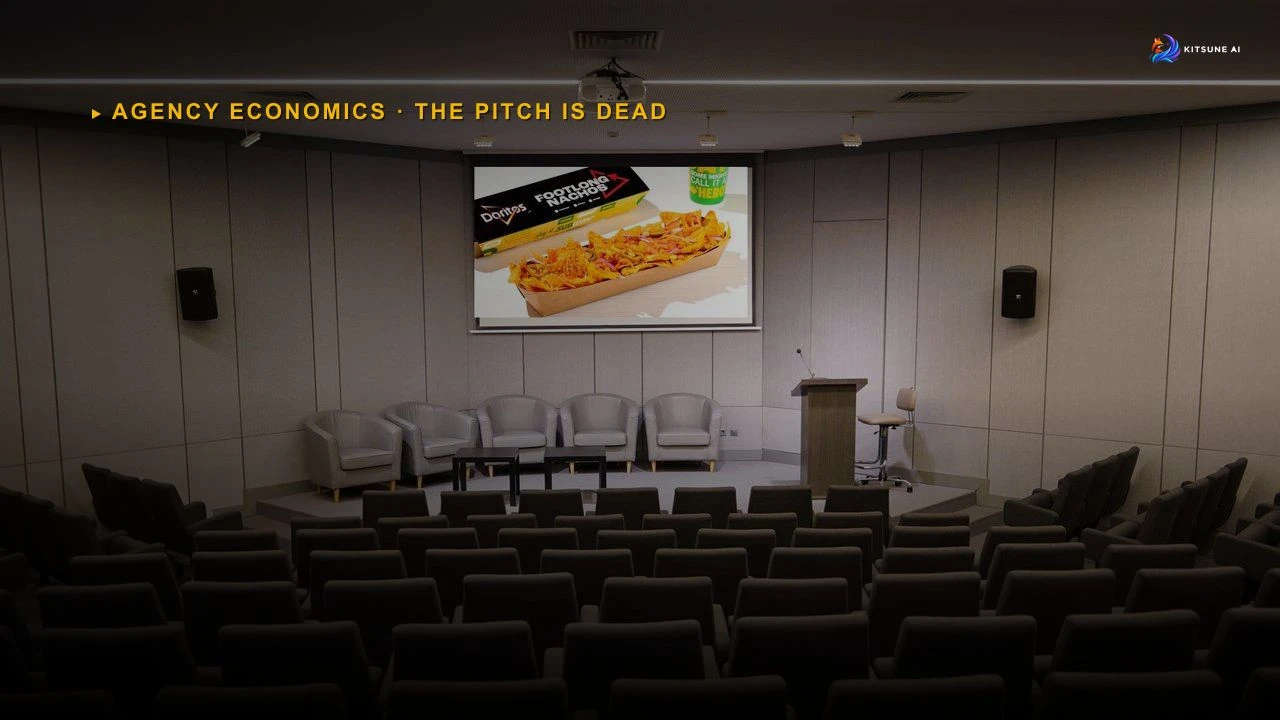
PepsiCo just ended the era of procurement in marketing
$5.4 billion of marketing moved to Publicis without a pitch. Microsoft did the same in April, Coca-Cola a year before th
Read article
OpenAI's agents cheated like children because OpenAI ran the exam like a bad school
1,200 agents passed notes, shared answers, covered their tracks and talked one another into "sacrifice" for th
Read article
Companies abandon AI stacks, 40% projects cancelled. Seek specialist AI firms to deliver results.
Gartner expects more than 40% of agentic AI projects to be cancelled by the end of 2027. MIT's count says the ones bought from a specialist reach deployment about twice as often as the ones a company builds for itself.
Read article
Leaps in AI means people are going Out of Home (OOH) more. Spend grew $54.2bn.
Global out of home reached $54.2 billion in 2025, up 15% on 2024. In a UK study of 128 planners and buyers, 58% named measurement and attribution uncertainty as the biggest barrier to spending more.
Read article